Lot 1 — Large PHOTO ALBUM, 1882-1884, WORLD TRAVEL, EGYPTIAN REVOLT, NAVAL HISTORY, USS Lancaster
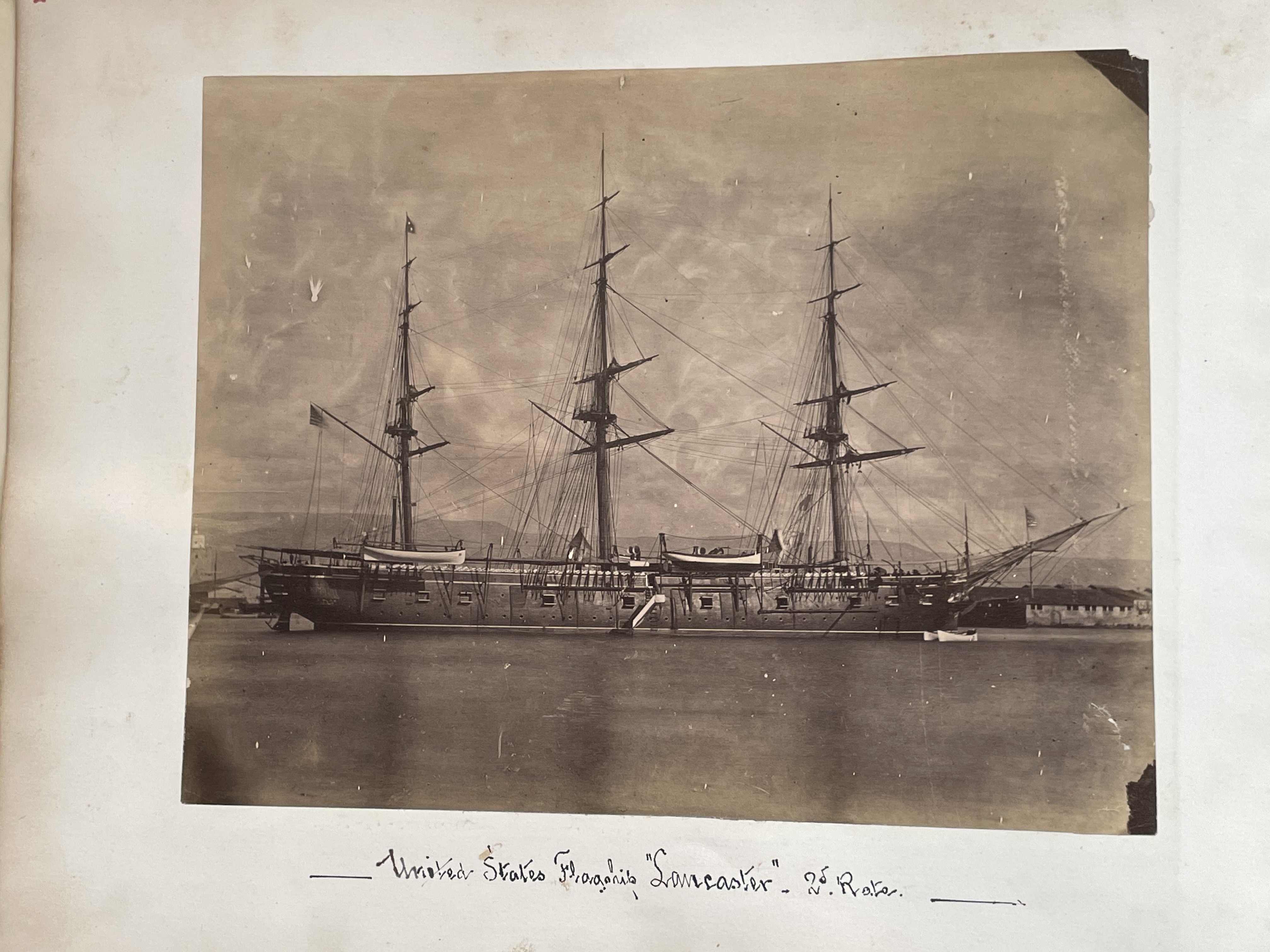
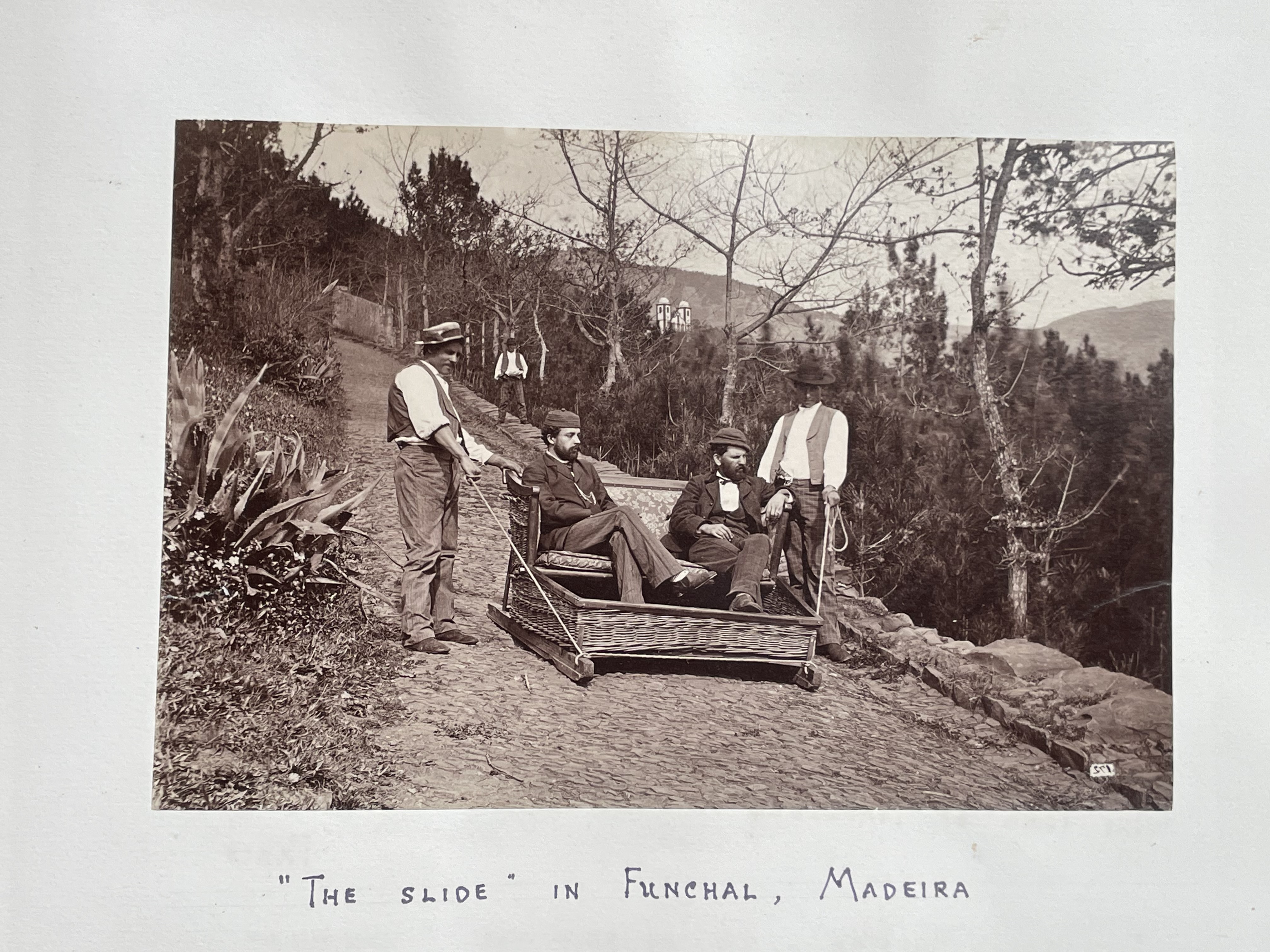
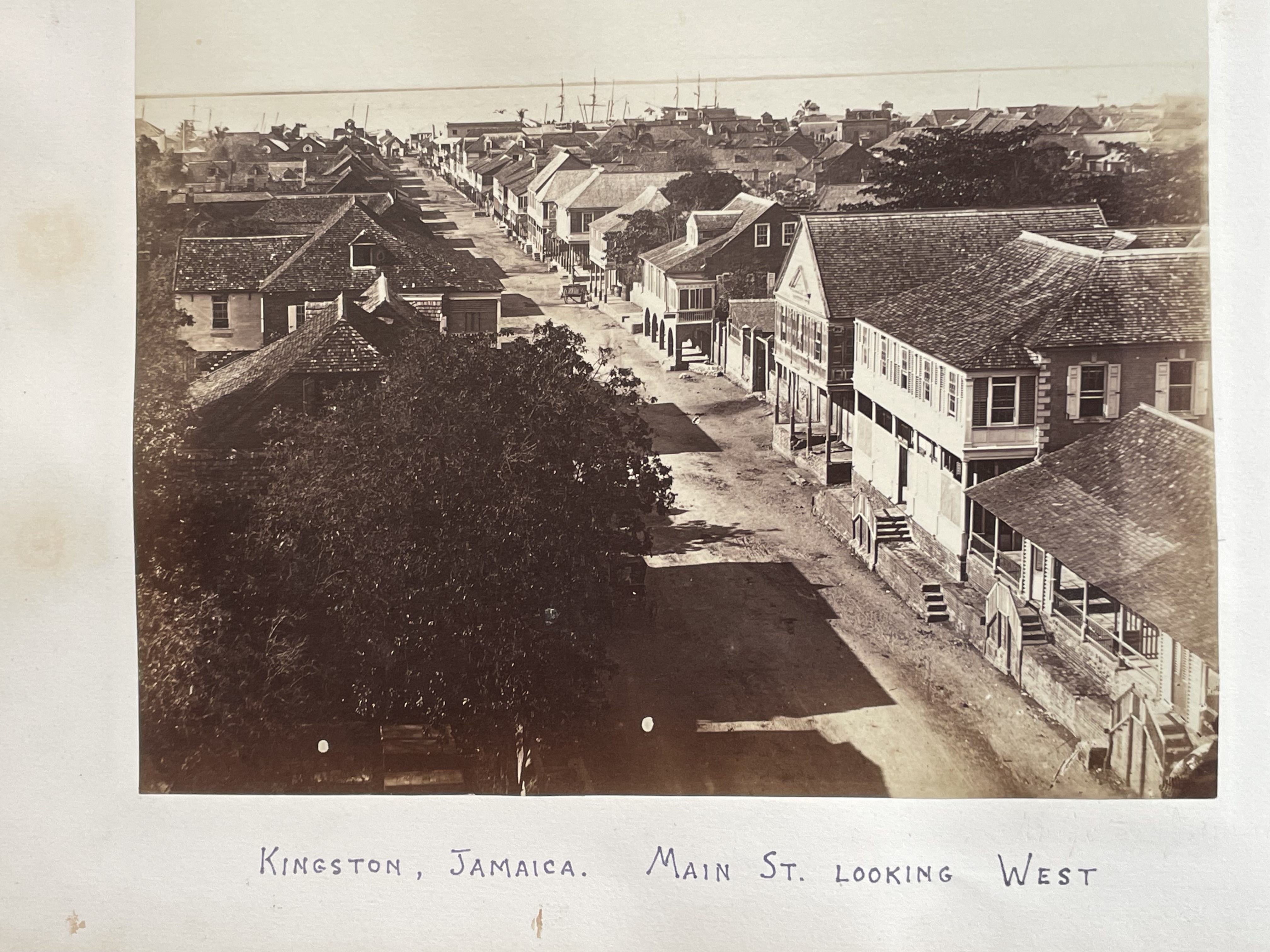
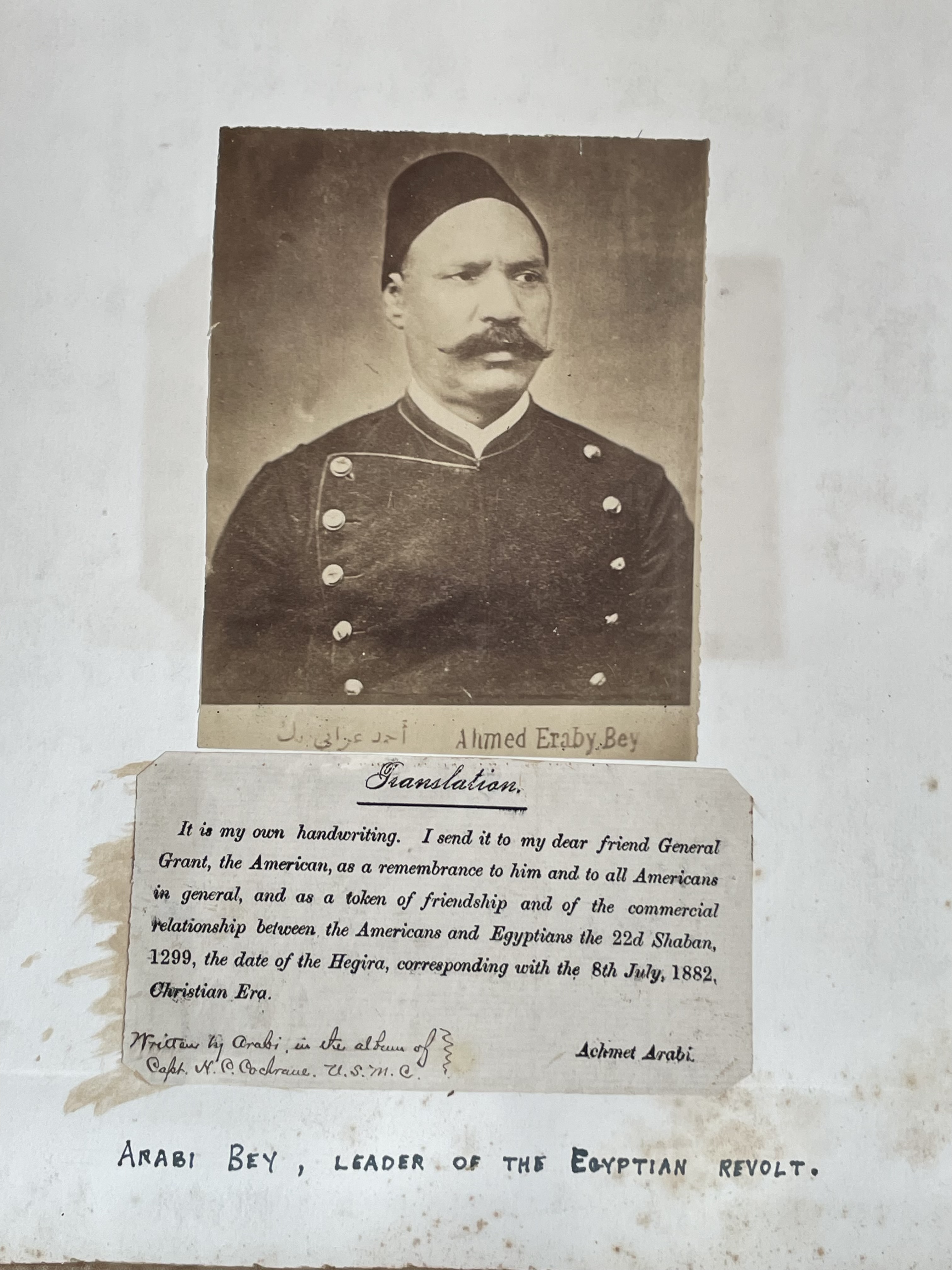
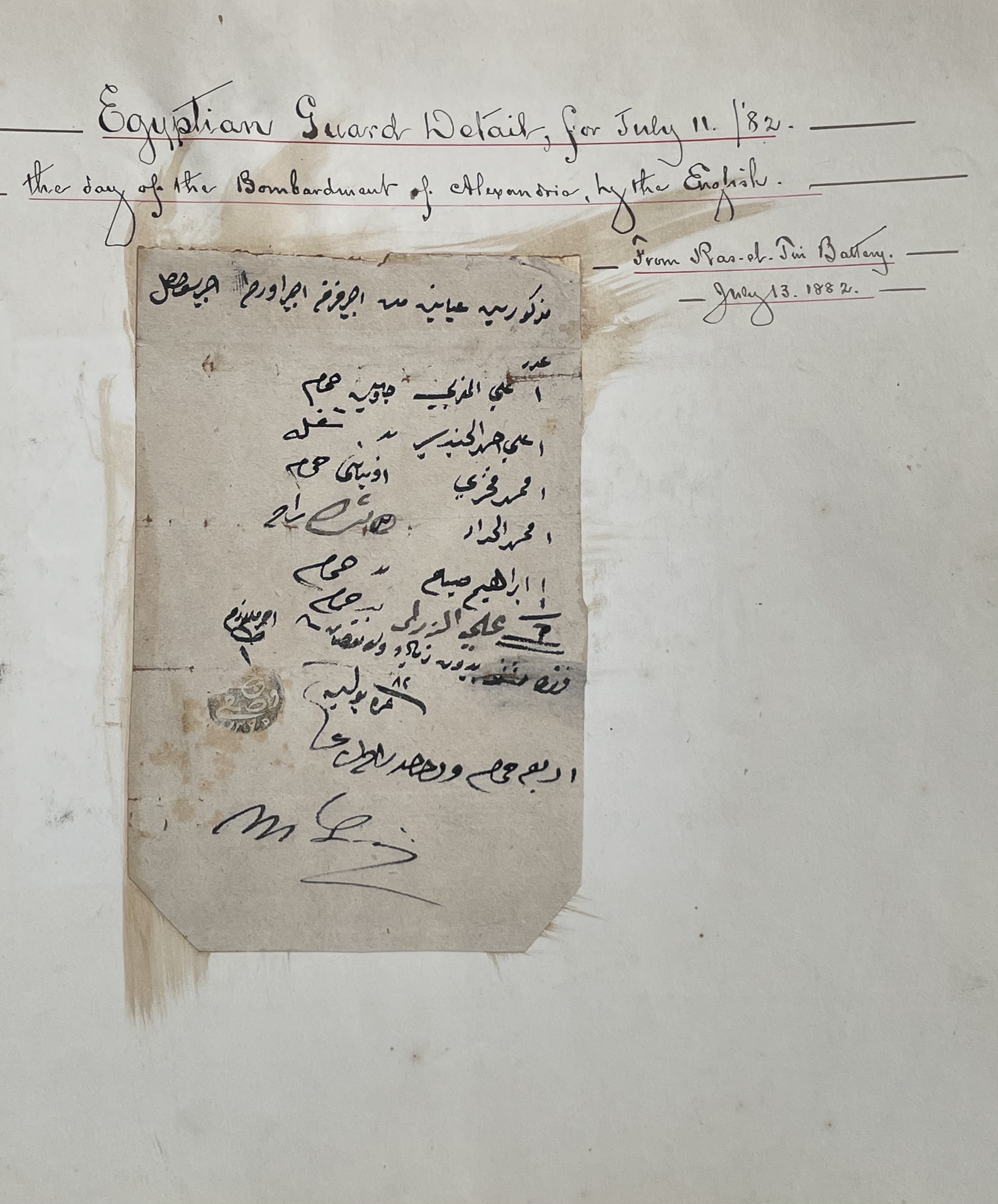
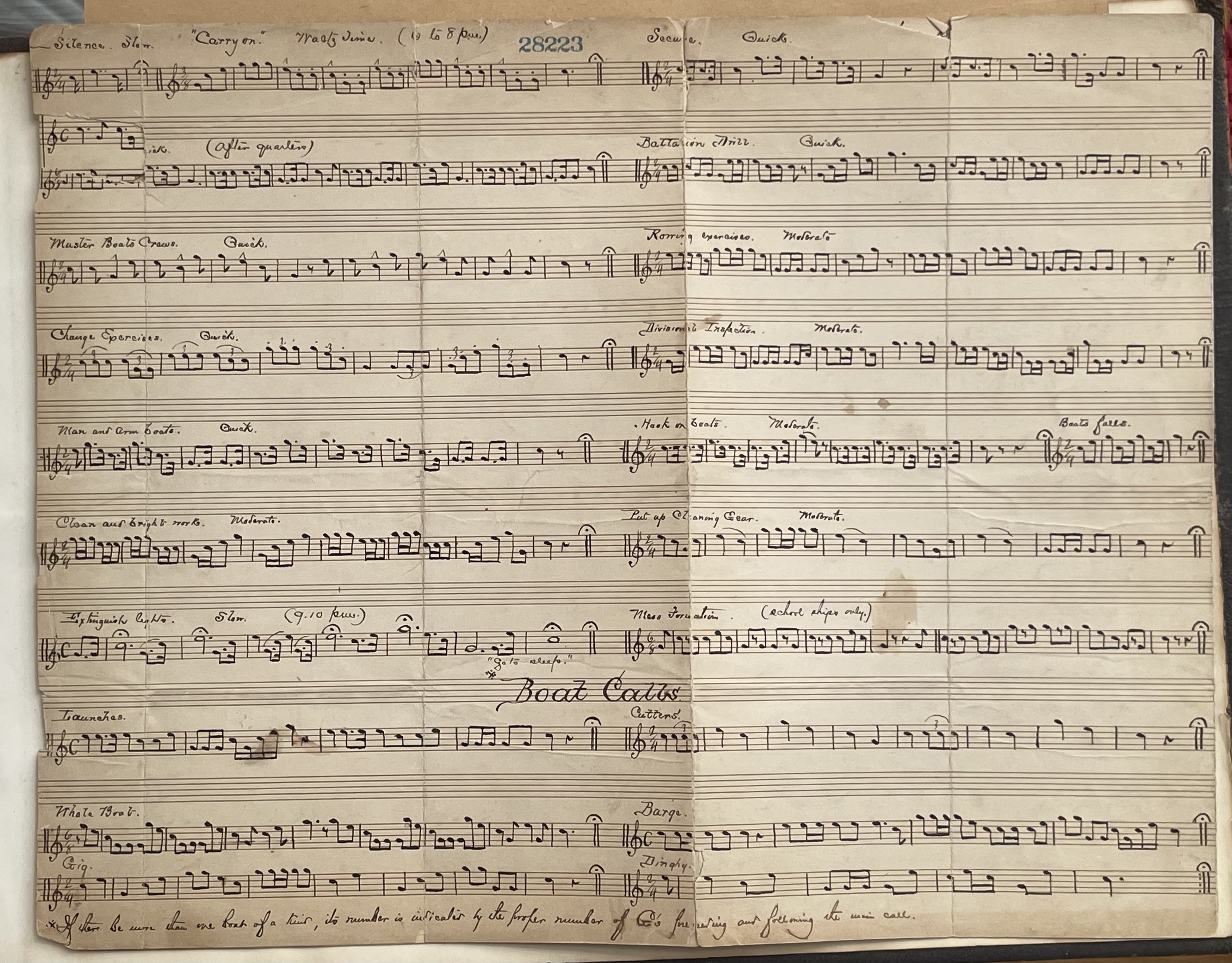
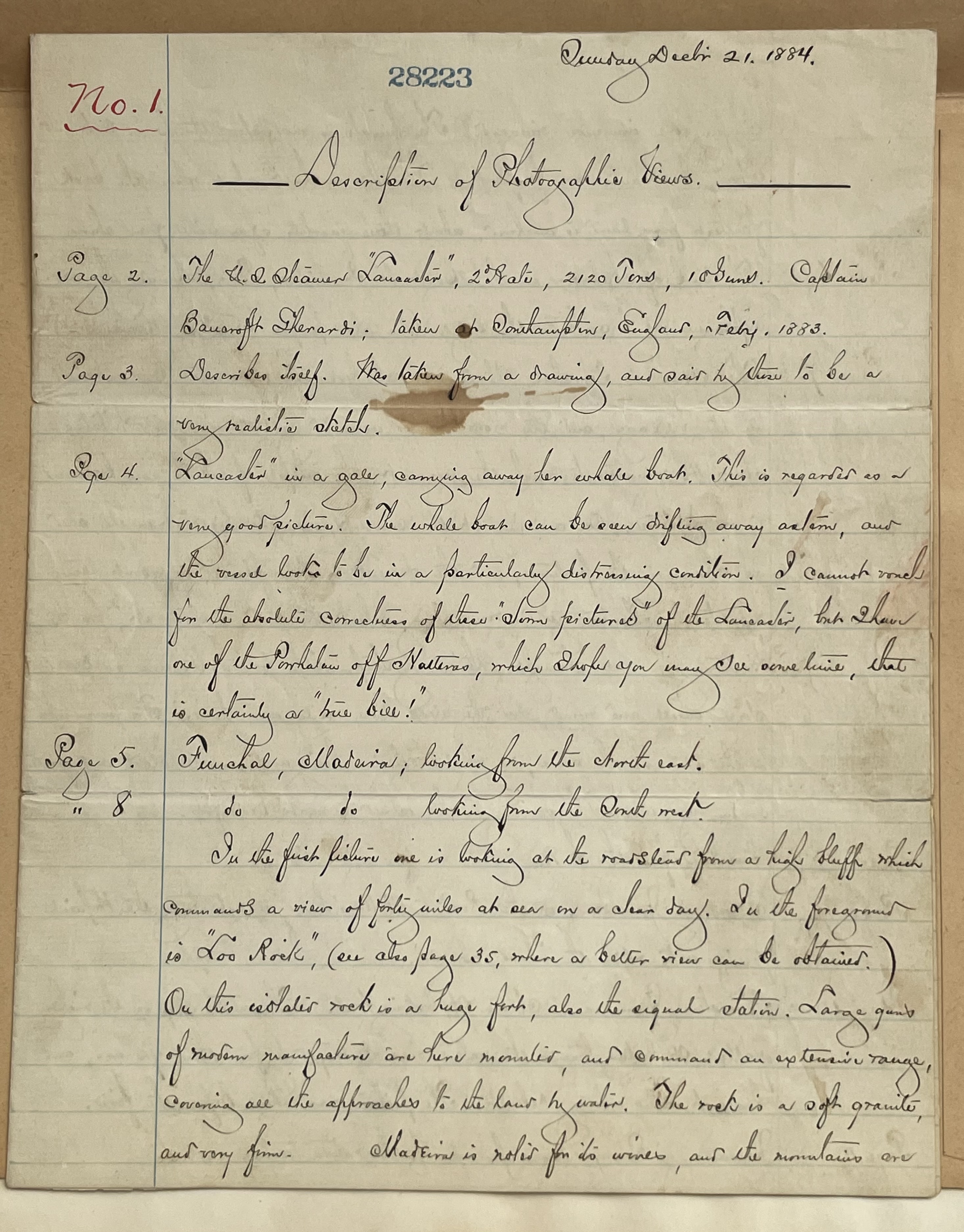
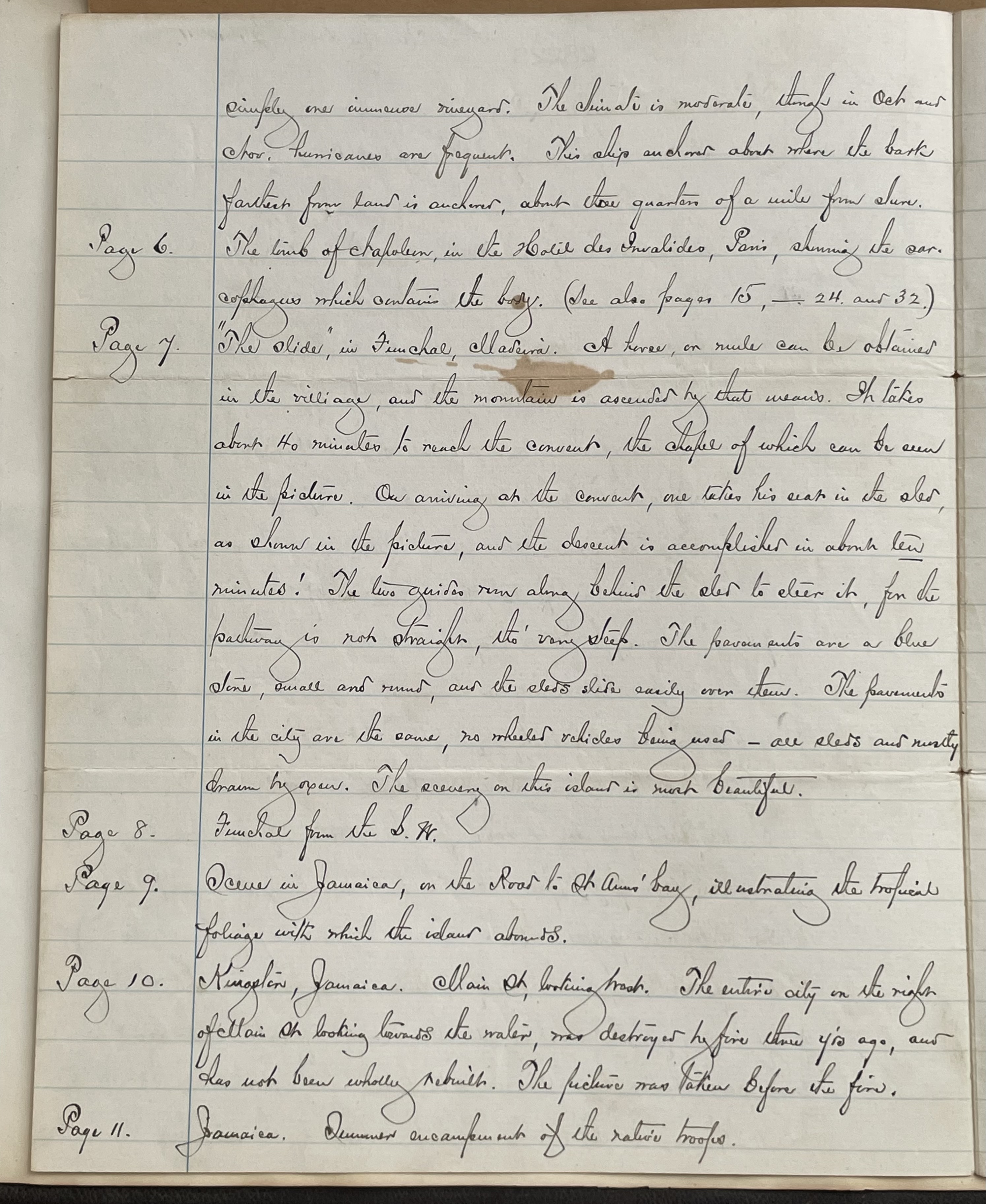
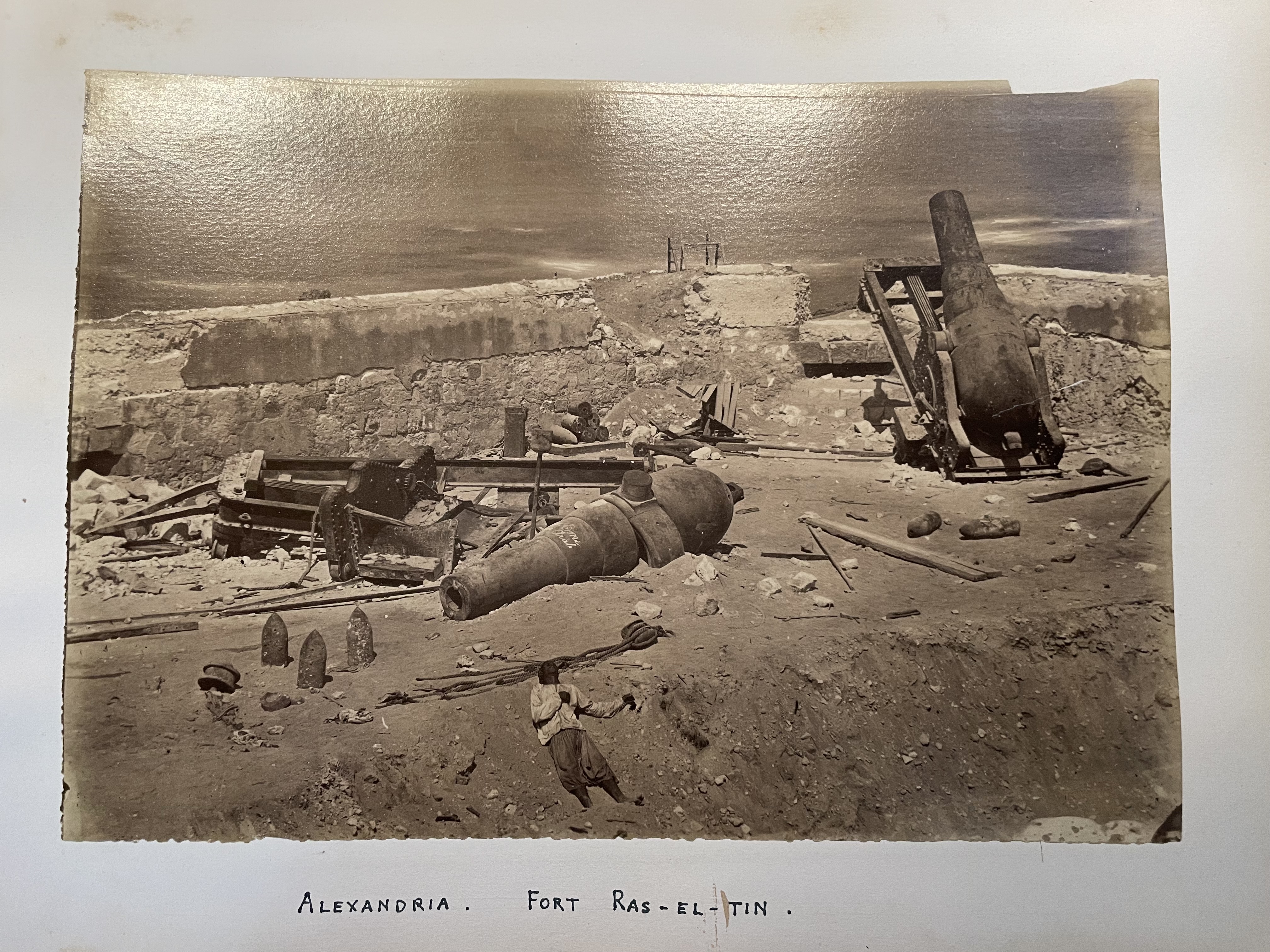
Photo album, compiled circa 1882-1884, possibly by Charles P. Thompson, Paymaster on the USS Lancaster at the time the album was created, titled "Description of Photographic Views". Large oblong folio, bound in contemporary full leather. Contains numerous mounted albumen photographs, meticulously captioned, depicting scenes from a world tour. Subjects include the U.S.S. Lancaster, views of Funchal Madeira, Kingston Jamaica, the Egyptian Revolt with a portrait of Ahmed Urabi Bey and related notes, alongside other views of Alexandria, Malta, Constantinople, and Paris. Manuscript descriptions of the views are present, along with several leaves of manuscript musical scores for military or naval calls. References to "Capt. W. Cochrane, U.S.N." underneath Urabi's portrait. The last page bears an original Arabic manuscript note mounted in an album page with contemporary English annotation identifying it as an "Egyptian Guard Detail" for July 11, 1882, the day of the British Bombardment of Alexandria. Additional note states "From Ras-el-Tin Battery, July 13, 1882." The Arabic document bears manuscript entries, signatures, and an official seal,
**Description of Photographic Views — 1882–1884**
- **Page 2.** The U.S. Steamer "Lancaster", 2d Rate, 2120 Tons, 10 Guns. Captain Bancroft Gherardi; taken at Southampton, England, Feby. 1883. - **3.** Describes itself. Was taken from a drawing, and said by those to be a very realistic sketch. - **4.** "Lancaster" in a gale, carrying away her whale boat. This is regarded as a very good picture. The whale boat can be seen drifting away astern, and the vessel looks to be in a particularly distressing condition. I cannot vouch for the absolute correctness of these "Storm pictures" of the Lancaster, but I have one of the Powhatan off Hatteras, which I hope you may see some time, that is certainly a "true bill!" - **5.** Funchal, Madeira; looking from the North east. [Note continues with p. 8: In the first picture one is looking at the roadstead from a high bluff which commands a view of forty miles at sea on a clear day. In the foreground is "Loo Rock" (see also page 35, where a better view can be obtained). On this isolated rock is a huge fort, also the signal station. Large guns of modern manufacture are here mounted, and command an extensive range, covering all the approaches to the land by water. The rock is a soft granite, and very firm. Madeira is noted for its wines, and the mountains are simply one immense vineyard. The climate is moderate, though in Oct. and Nov. hurricanes are frequent. This ship anchored about where the bark farthest from land is anchored, about three quarters of a mile from shore.] - **6.** The tomb of Napoleon, in the Hotel des Invalides, Paris, showing the sarcophagus which contains the body. (See also pages 15, 24, and 32.) - **7.** "The Slide", in Funchal, Madeira. A horse, or mule can be obtained in the village, and the mountain is ascended by that means. It takes about 40 minutes to reach the convent, the chapel of which can be seen in the picture. On arriving at the convent, one takes his seat in the sled, as shown in the picture, and the descent is accomplished in about ten minutes! The two guides run along behind the sled to steer it, for the pathway is not straight, tho' very steep. The pavements are a blue stone, small and round, and the sleds slide easily over them. The pavements in the city are the same, no wheeled vehicles being used — all sleds and mostly drawn by oxen. The scenery on this island is most beautiful. - **8.** Funchal from the S.W. (looking from the South west; see note at p. 5.) - **9.** Scene in Jamaica, on the Road to St Ann's bay, illustrating the tropical foliage with which the island abounds. - **10.** Kingston, Jamaica. Main St, looking west. The entire city on the right of Main St looking towards the water, was destroyed by fire three y'rs ago, and has not been wholly rebuilt. The picture was taken before the fire. - **11.** Jamaica. Summer encampment of the native troops. - **12.** The Arc de Triomphe, Paris. - **13.** Paris. Palace du Luxembourg. - **14.** Garden of the Tuilleries. - **15.** Chapel and Vault, Napoleon's Tomb. Hotel des Invalides. Paris. - **16.** Paris. Main Altar. Notre Dame Cathedral. - **17.** Paris. Grand Opera House. - **18.** Paris. Fountain and Obelisk — Place de la Concorde. (see also p 22.) - **19.** Paris. Column of July, and original site of the Bastile. - **20.** Paris. Palace de la Institute. - **21.** Paris. The Louvre. - **22.** Paris. Place de la Concorde, fountain and obelisks. (see also p 18.) - **23.** Paris. Entrance to Palais Royal. - **24.** Paris. Entrance to Hotel des Invalides. - **25.** Paris. Palace of Industry. - **26.** Paris. Notre Dame Cathedral. - **27.** Paris. Vue Generale of Paris, from the Hotel de Ville, looking East. Showing the Arc de Triomphe, the Champs Elysées, the Louvre, Notre Dame, Marie Antoinette's prison, etc. - **28.** Statue of St Peter, in the Vatican, Rome. This famous statue is of bronze, and is mounted on a granite and marble pedestal. The great toe is nearly gone, having been worn down by kisses from devout Catholics. The pained expression on the face was no doubt caused by the loss of the toe! Too bad! - **29.** Paris. The Grand Hotel. - **30.** Tomb of the Mamelukes. Cairo. Egypt. - **31.** Some Egyptian monuments. - **32.** Shrine in Chapel. Tomb of Napoleon. - **33.** Paris. Another view of the Place de la Concorde. - **34.** Fayal. Azores Islands. Where the Powhatan touched, on her trip to Lisbon. - **35.** Loo Rock. Funchal. Madeira. - **36.** H.B.M. Ship "Monarch", one of the fleet which participated in the bombardment of Alexandria. - **37.** Harbor of Malta, with H.B.M. Mediterranean fleet at anchor. The ship on the left in front is the "Invincible", the centre one of the three on the left, the "Penelope", the one in the centre, with so many small boats around her, the "Achilles", and the side wheeler on the right the "Helicon". The other vessels are school-ships. - **[38.** — no entry; skipped in the manuscript.] - **39.** Alexandria — Fort Ada. After the bombardment. - **40.** Constantinople. Interior of the Mosque of St. Sophia. - **41.** Exterior of the same. A belief of the Turks is to the effect that "when the dome of St Sophia falls, the Ottoman Empire will cease to exist". Within five years several huge pieces of plaster have fallen from the interior of the dome, and the Turks are beginning to feel weak! - **42.** Alexandria. Forts Ada and Pharos, after the bombardment. - **43.** do. Fort Ada. The English fleet were 9 hours at work on this fort, before they succeeded in blowing up the magazine. - **44 & 45.** Alexandria. Mohammed Ali Square before and after the bombardment and fire. - **46.** Egypt. Entrance to the Suez Canal at Port Said. English ships at anchor. - **47.** Alexandria. Fort Meks, after the bombardment. The muzzle of the gun in the foreground, was blown off with gun cotton, after the occupation by the English. These were the Egyptians' most powerful guns. - **48.** Fort Meks — from another section of the fort. - **49.** Alexandria. Fort Ras-el-Tin. The Arab lying in the foreground was placed there for effect, as all bodies were buried at once by the English, and the photos were not taken for at least a week after the bombardment and fire. - **50.** Constantinople. Turkey. - **51.** Bridge from Constantinople to Stamboul. - **52.** Fort Ras-el-Tin, Alexandria, showing the yacht of the Khedive of Egypt, the "Maha-rousah" [Mahroussa], twenty-five feet longer than the U.S.S. "Tennessee", the longest ship of the American Navy! - **53.** Alexandria. Fort Ras-el-Tin, showing the base of the light house, at the entrance to the harbor. - **54.** Fort Meks. (See also p 47.) - **55.** Fort Pharos, on the corner of which was mounted the largest gun the Egyptians had — an 81 ton gun. - **56.** Fort Ada. - **57.** Alexandria. Ras-el-Tin Palace, the home and harem of the Khedive. Fort Ras-el-Tin on the left. - **58.** Pompey's Pillar. (See Ancient Histories.) - **59.** A Palace on the Bosphorus. - **60.** Gardens of the Sultan, Constantinople. - **61.** Corridor in the Governor's palace, Malta. - **62.** do. do. do. do. - **63.** Jerusalem, and the Valley of Gethsemane. - **64 & 65.** Jerusalem. Two views of the Church of the Holy Sepulchre. Here are shown the stone that was rolled away from the tomb of the Saviour, and other relics. - **66.** Exterior of the church of St John's, Malta. - **67.** Interior of same, and principal altar. - **[68.** — no entry; skipped in the manuscript.] - **69.** Types of Egyptians, Turks &c.: - No 1. A Turkish cavalryman. - No 2. An Armenian girl. - No 3. Egyptian musicians. - No 4. An Armenian woman — unmarried. - No 5. The same — married. (poorer class.) - No 6. A Turkish Gypsy. - No 7. A Turkish married lady. - No 8. An Armenian Priest. - **70.** Bethlehem. - **71.** Cairo. - **72.** The Valley of Jehoshaphat. On the left the Mount of Olives. The two tombs in the foreground, are pointed out as those of St Luke (on the right) and Absalom (on the left). - **73.** Entrance to the Harbor of Malta. - **74.** Governor's dining room, Council Hall, Malta. - **75.** Alexandria. The English quarter. - **76.** The Nile and the Pyramids. - **77.** do. do. do. - **78.** The Great Pyramids - **79.** The Sphynx. - **80.** View at the Pyramids. - **81.** A Turkish woman. - **82.** Arabi Bey, the leader of the Egyptian revolt.